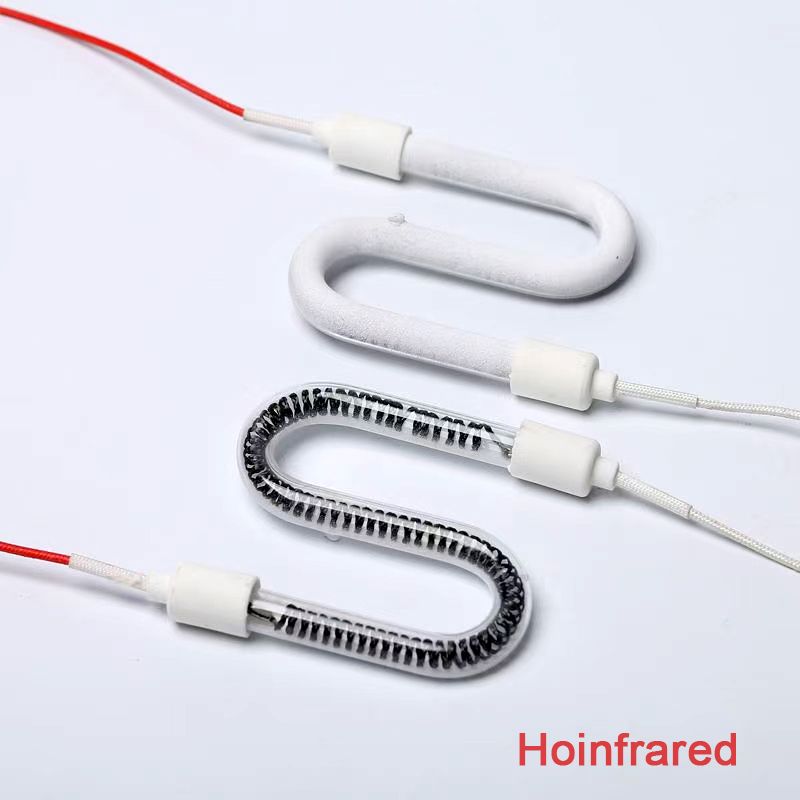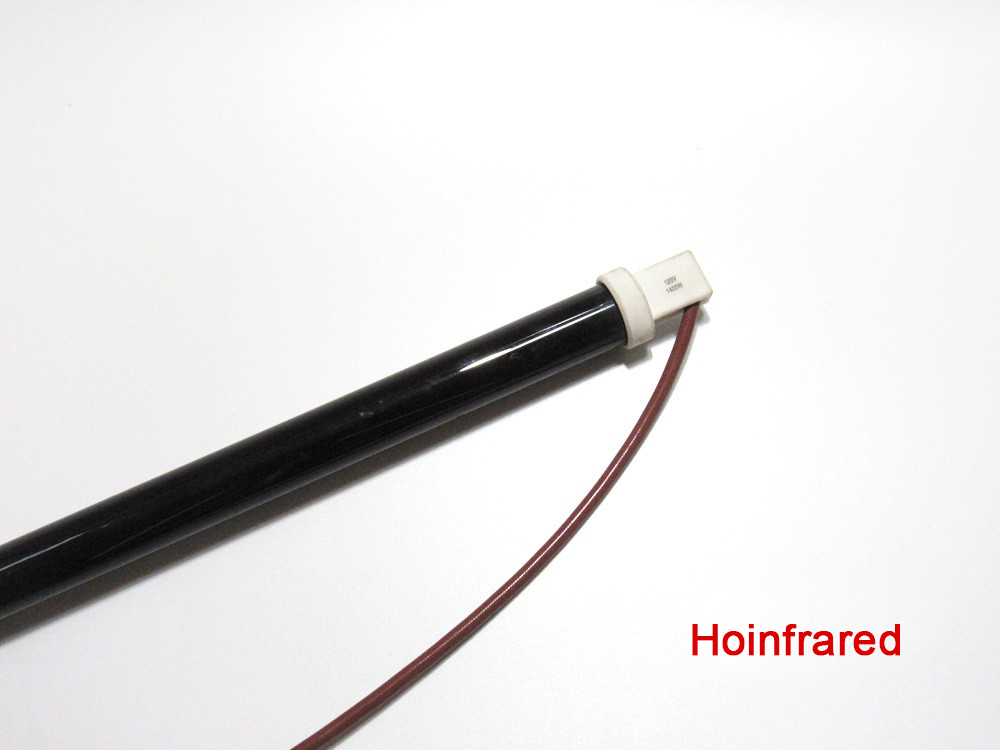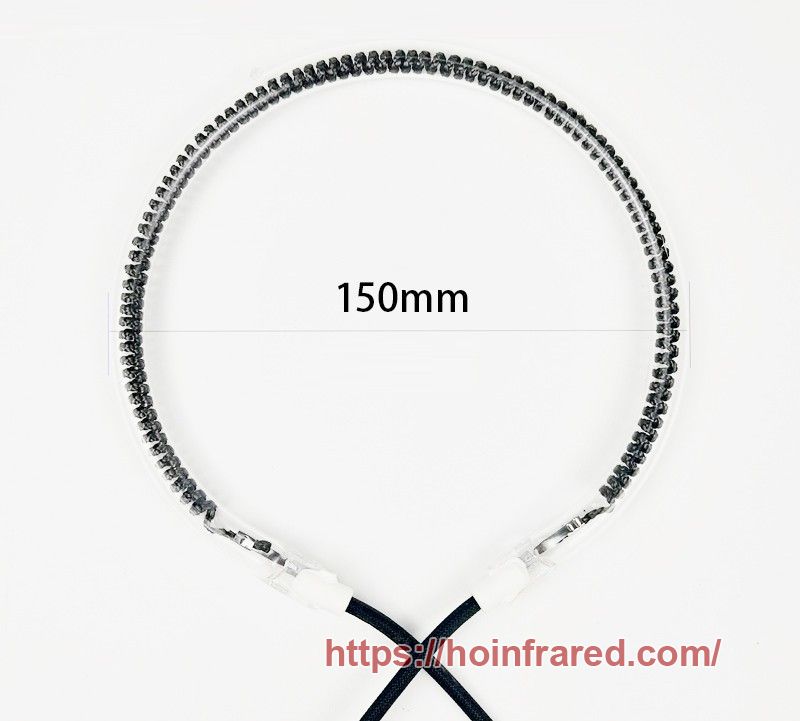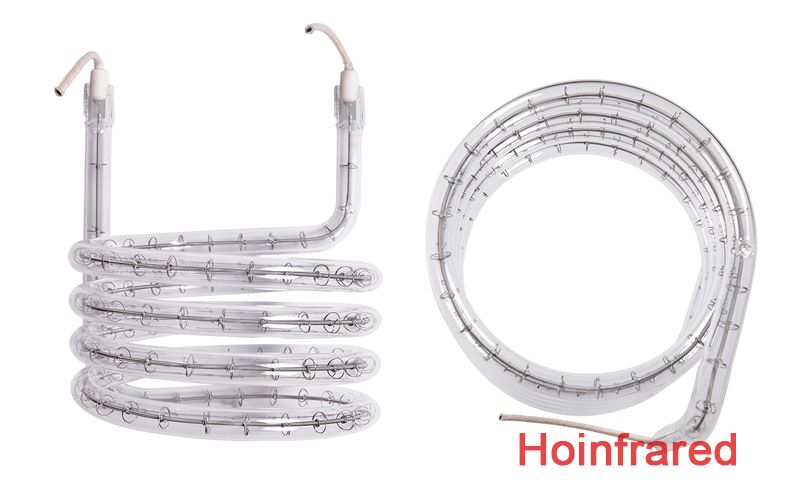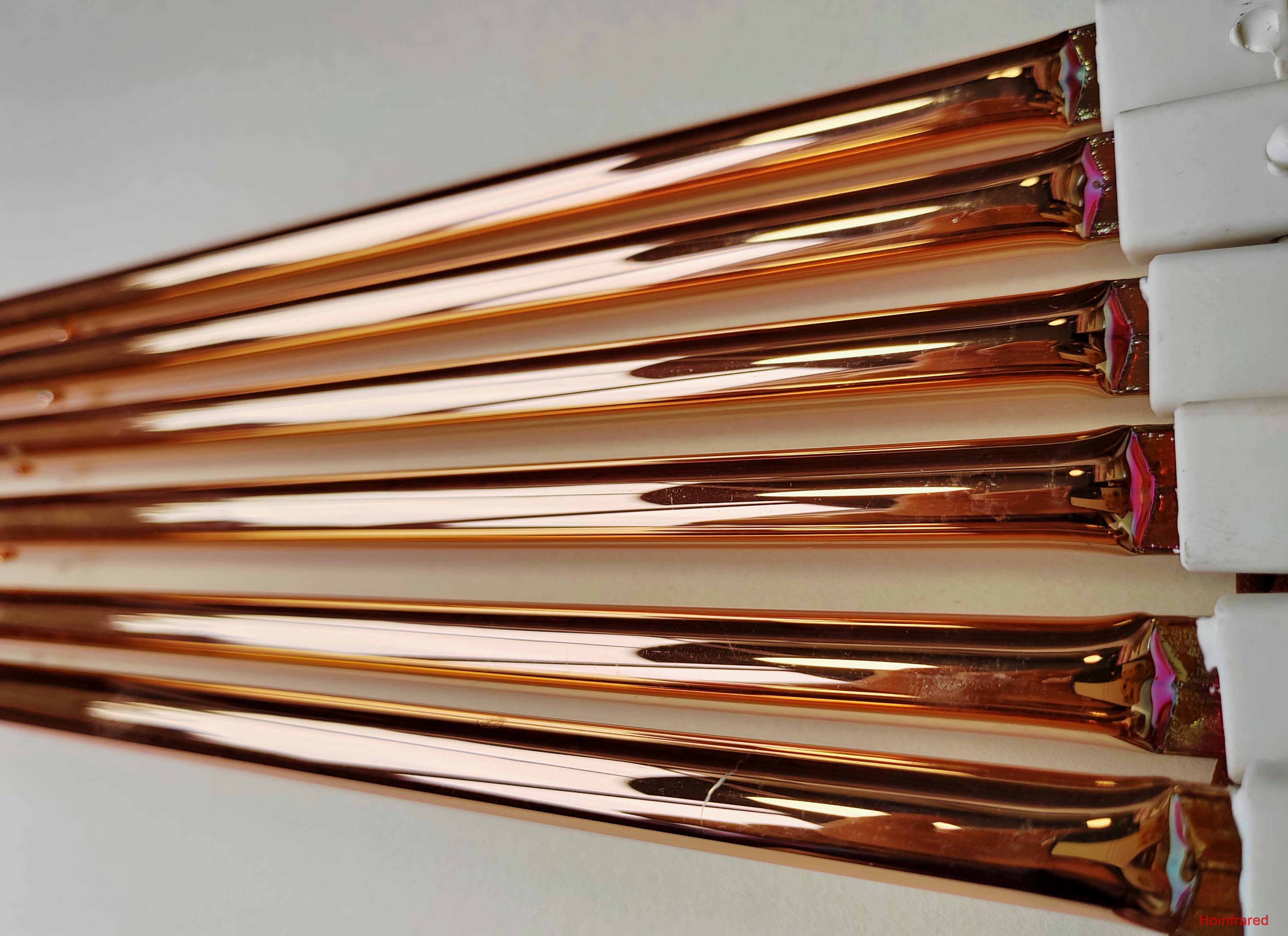
Infrared heating tubes in the infrared baking field are primarily classified into three types—near-infrared, mid-infrared, and long-wave infrared heating tubes—based on their light wavelength ranges.
1. Near-infrared heating tubes (also known as short-wave infrared heating tubes)
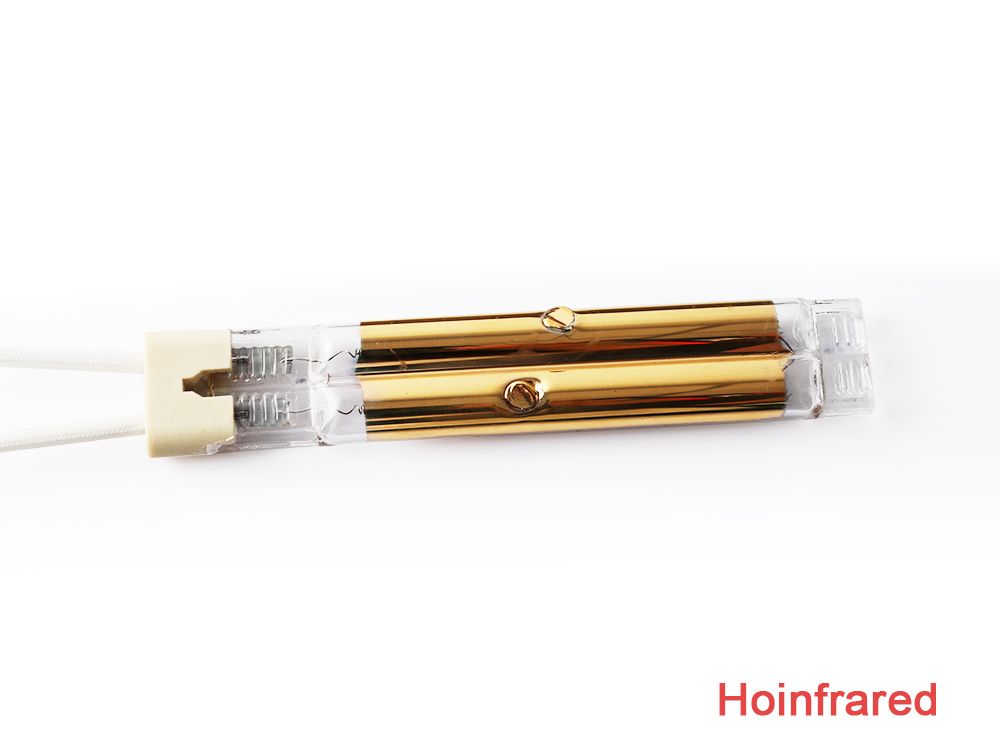
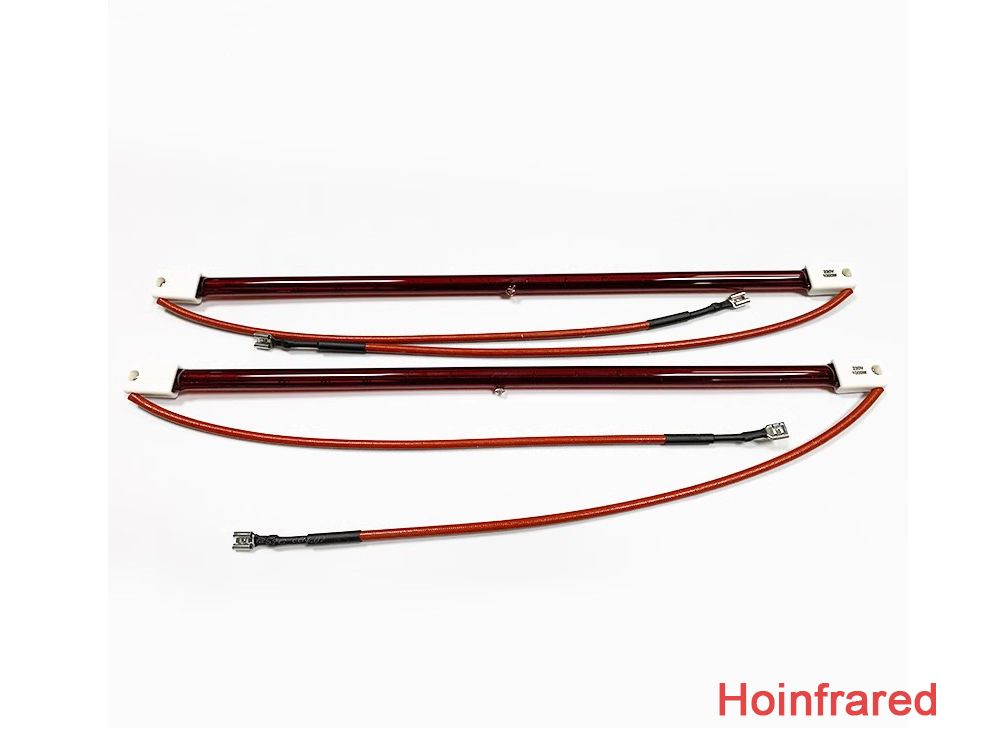
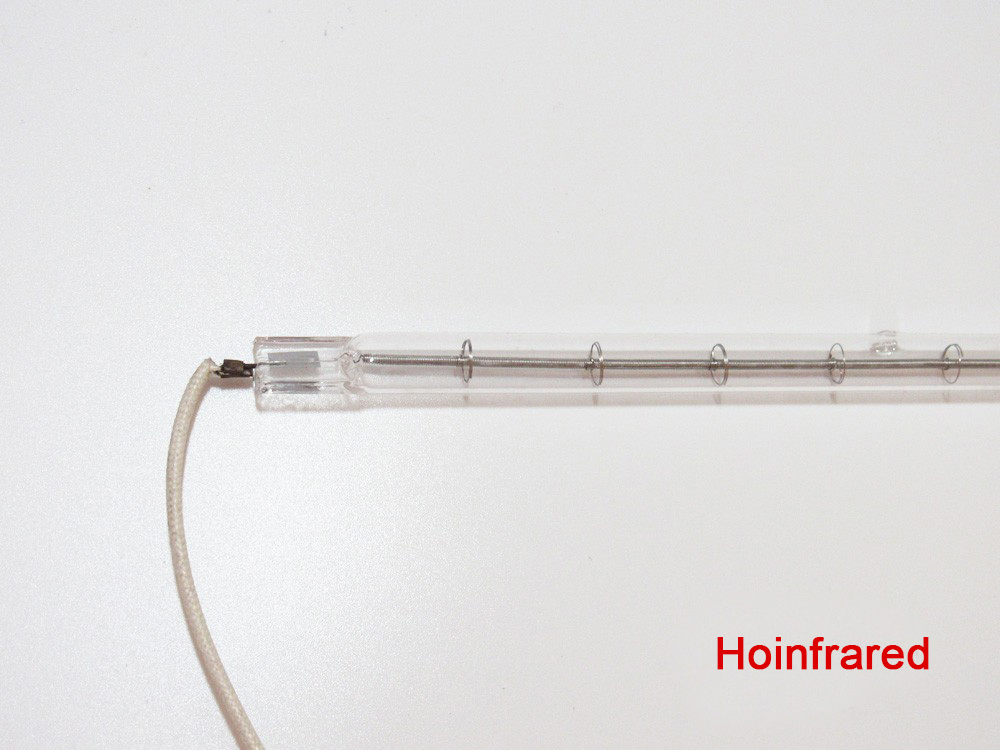
The short-wave wavelength range is 0.75–1.4㎛, with a luminous color temperature of approximately 2450 K and rapid heating response. These tubes feature an alloy tungsten filament sealed inside a vacuum-evacuated quartz glass tube, supported by a coil structure and filled with halogen gas. The short-wave infrared heating tubes use quartz glass capable of withstanding temperatures up to 1350℃, encapsulated with molybdenum foil that matches the thermal expansion coefficient, along with specially selected alloy tungsten filaments. According to Planck's law, shorter wavelengths correspond to higher energy and higher temperatures. Therefore, short-wave infrared heating tubes have strong radiant penetration, enabling them to effectively heat thick materials such as metals, ceramics, coatings, and glass. They are widely used in packaging containers, chemical and pharmaceutical industries, furniture manufacturing, ceramics, textile printing and dyeing, papermaking, glass processing, printed circuit boards (PCBs), automotive paint curing, tanning beds, microwave ovens, metalworking, plastic processing, food processing, wood drying, optoelectronics, solar cell string welding machines, heat treatment, and more.
2. Medium-wave infrared heating tubes (further categorized in the industry into medium-wave and fast-medium-wave types, with fast-medium-wave having a peak shifted toward shorter wavelengths)
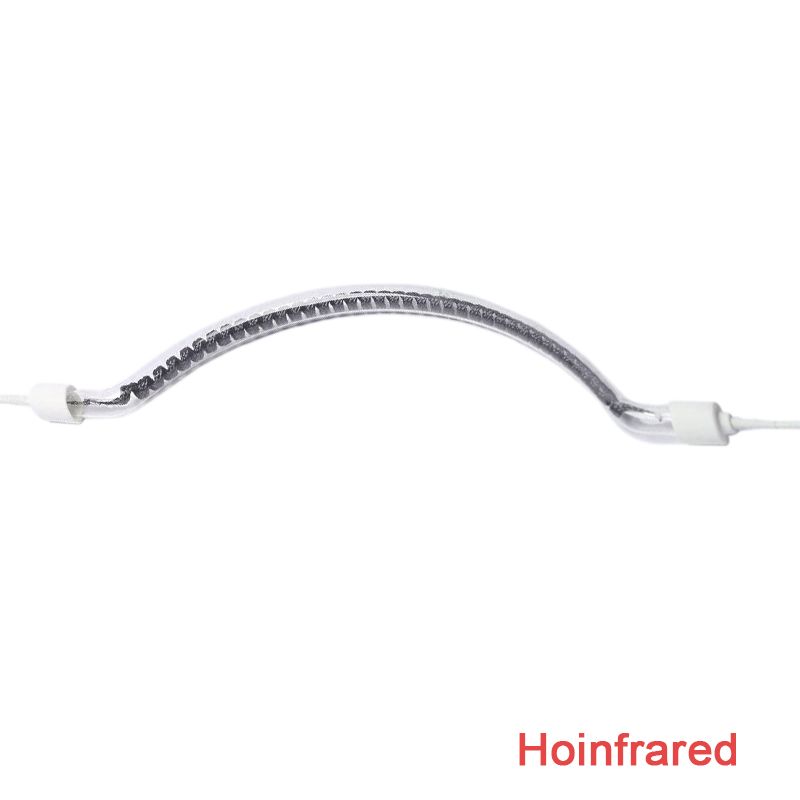
The wavelength range of medium-wave is 1.4–3㎛, with a color temperature of approximately 1000–1800 K. The heating-up time is slower compared to short-wave. These tubes feature a coiled heating element sealed inside a quartz glass tube, which may be either evacuated or non-evacuated. The heating wire is tightly wound against the inner wall of the tube. Medium-wave radiation has weaker penetration than short-wave, and its spectral characteristics are more readily absorbed by plastics, water, and other solvents. They are widely used for curing rubber, plastics, various powder coatings, water-based coatings, primers, topcoats, paints and dyes, printing inks, films, glazes, pastes, adhesives, and bonding agents.
3. Long-wave infrared heating tubes (also known as far-infrared heating tubes)
The long-wave range is 3–1000㎛, with a luminous color temperature of approximately 800–1000 K, and the heating-up time is slower than that of medium-wave tubes. These tubes feature a heating element (such as nichrome wire or iron-chromium-aluminum alloy) encapsulated in quartz glass without vacuum evacuation (sometimes using milky white quartz sleeves or silicon carbide sleeves). The heating wire is coiled and closely attached to the tube wall. Due to their longer wavelength, they have relatively weak penetration power. They are less efficient for industrial drying applications and are commonly used in human infrared therapy.
IR ray is a kind of electromagnetic wave. It transmits energy at the speed of light. The energy from the sun mostly transmits by it. In spectral distributions, ......
IR ray is a kind of electromagnetic wave. It transmits energy at the speed of light. The energy from the sun mostly transmits by it. In spectral distributions, ......