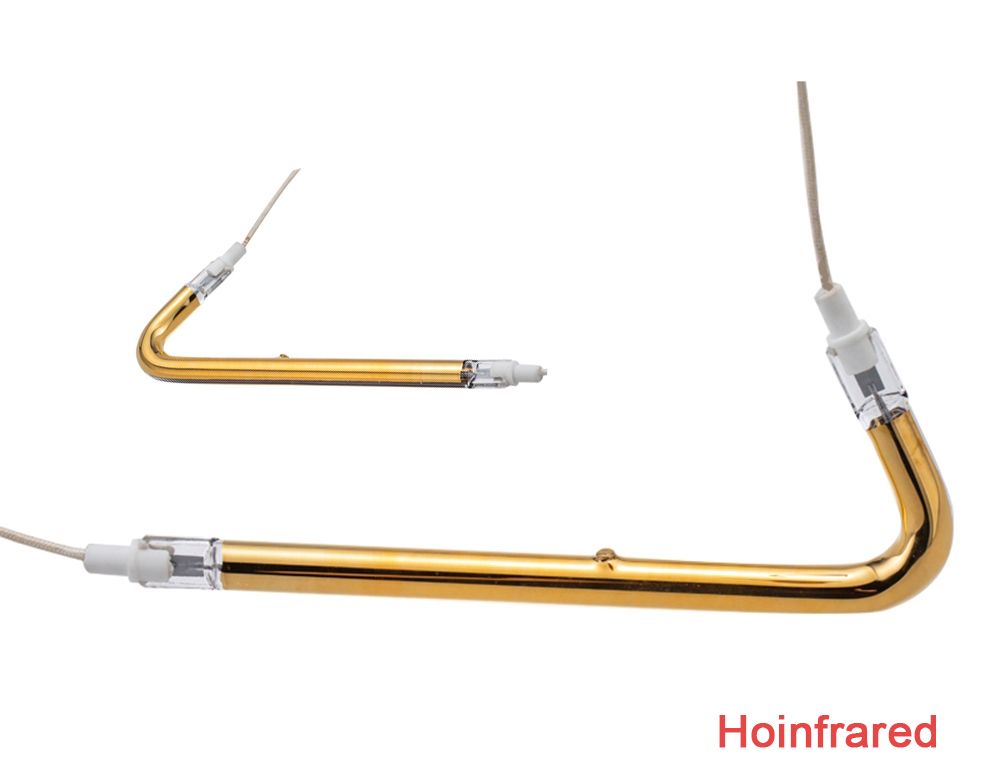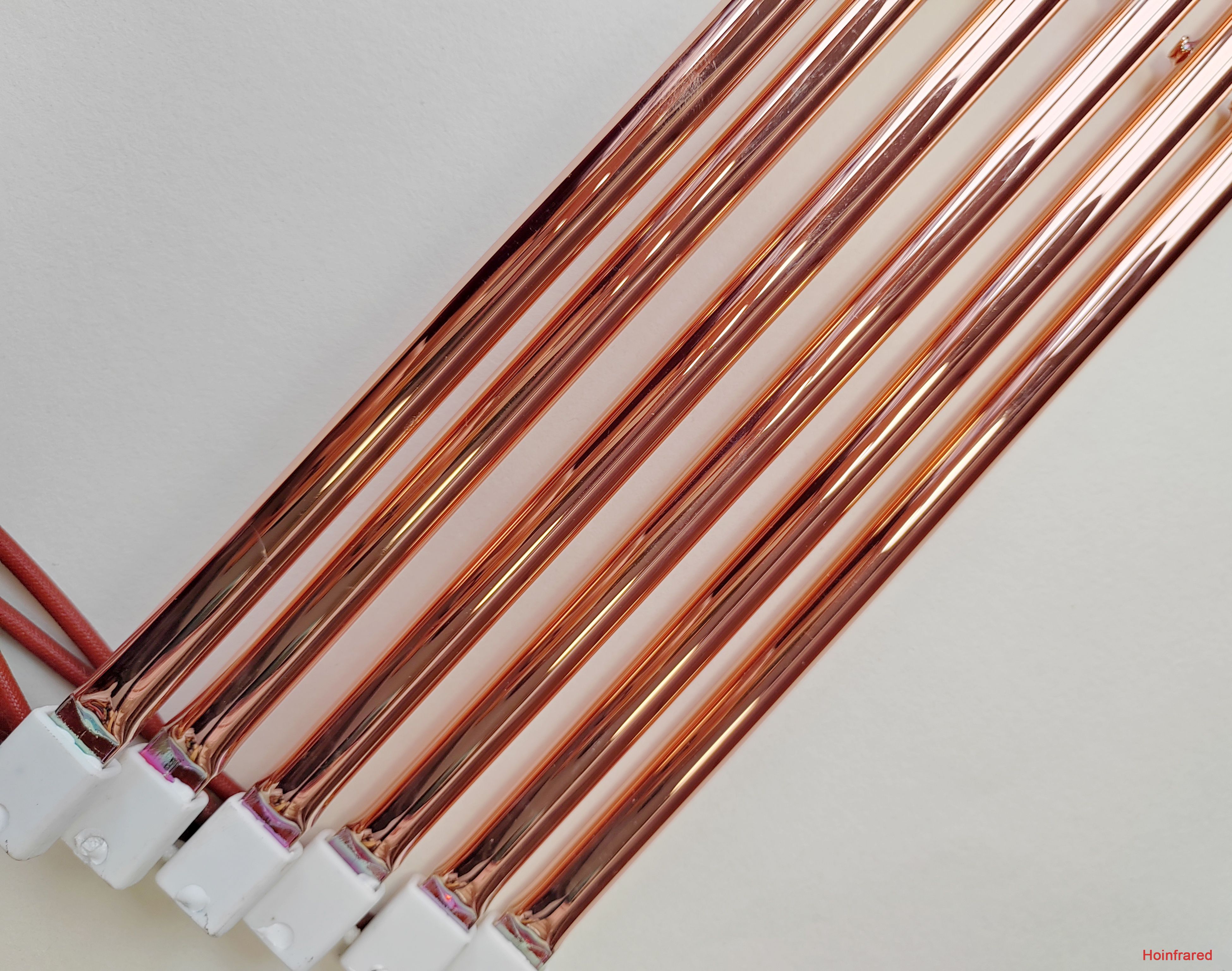
(1) High-quality filament material
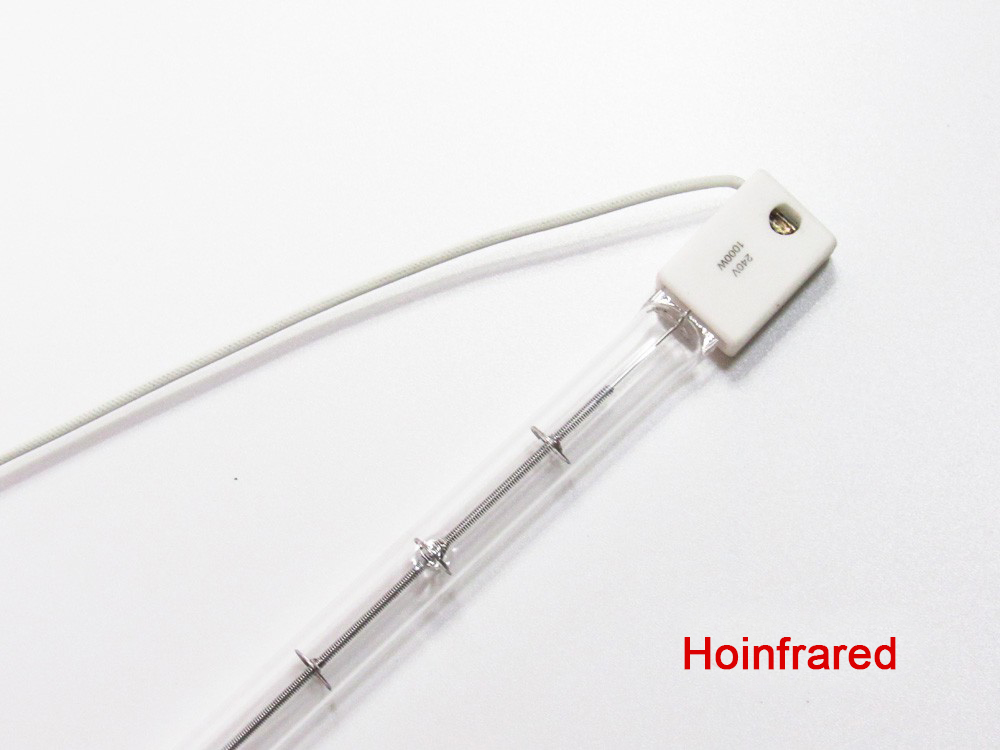
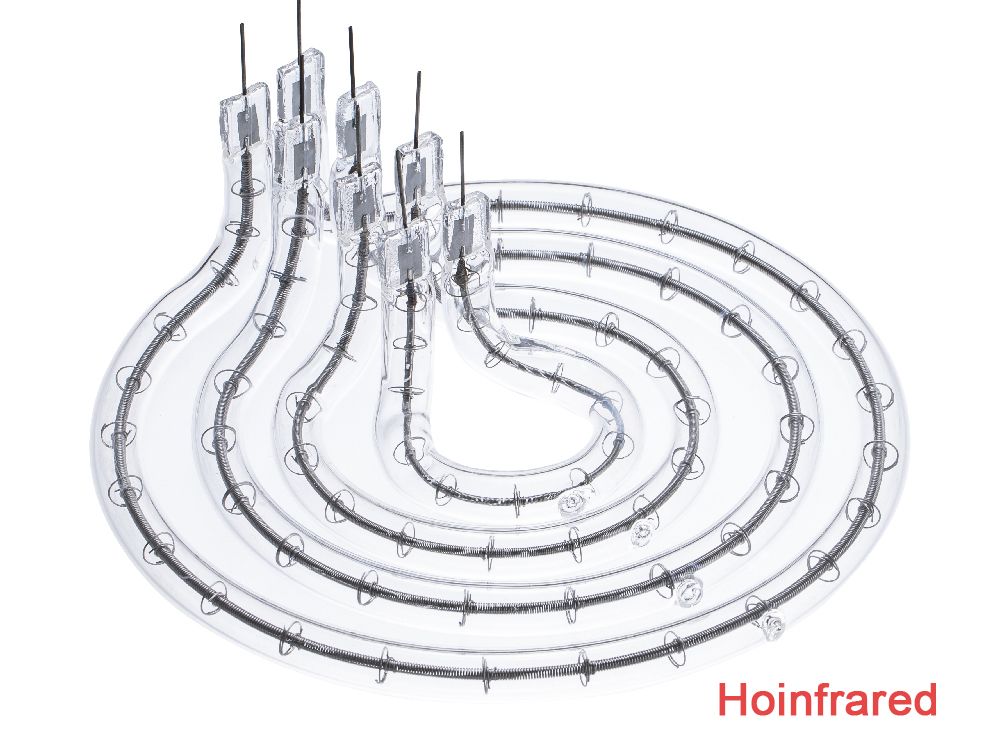
We use high-purity tungsten filaments, sometimes doped with rare earth elements (such as thorium or cerium) to enhance heat resistance and electron emission capability, ensuring stable and consistent heat output.
(2) Optimized structural design
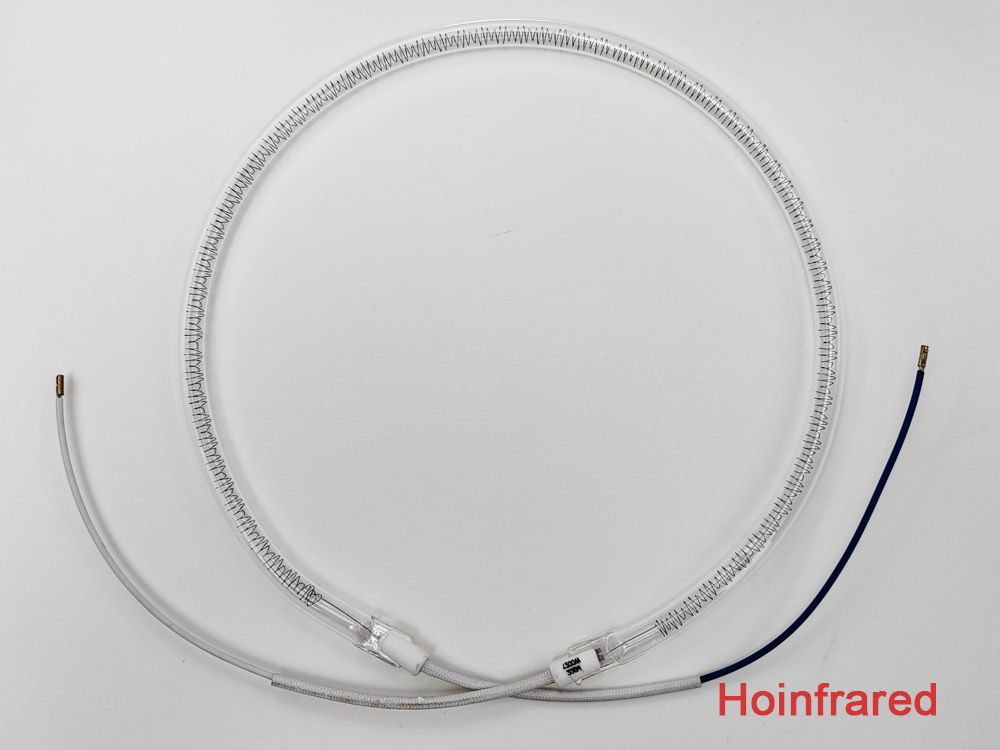
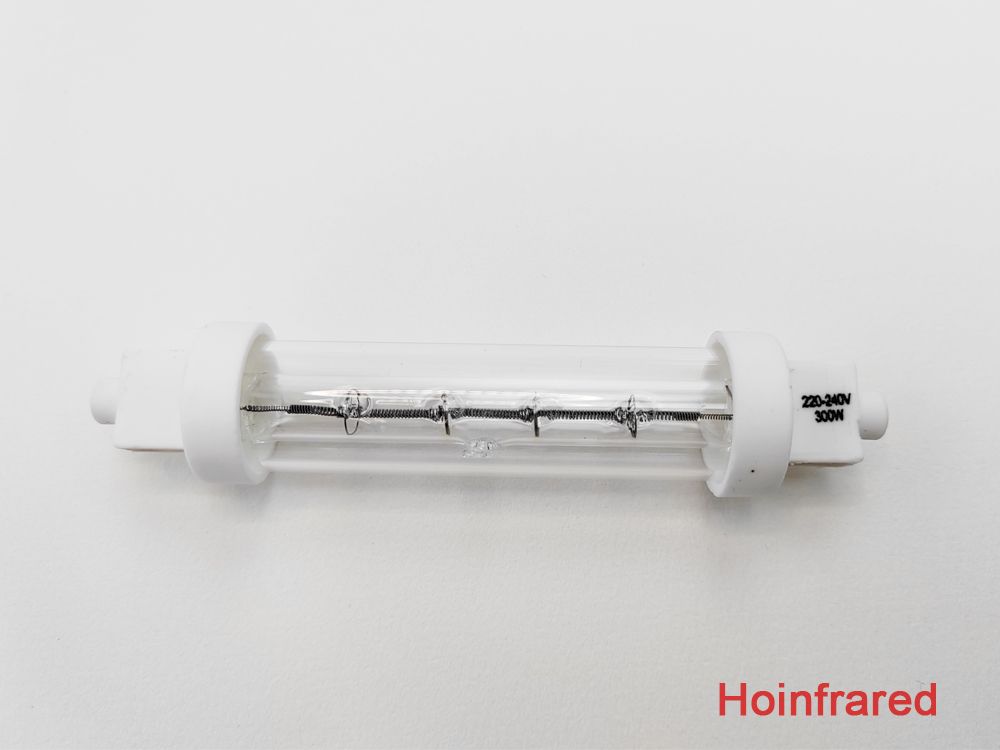
The filament is wound into a spiral or double-spiral configuration to increase the heating surface area. By precisely controlling the number of turns and wire diameter, we can accurately adjust the range of infrared wavelengths emitted.
(3) High-transmittance, high-temperature-resistant quartz tube
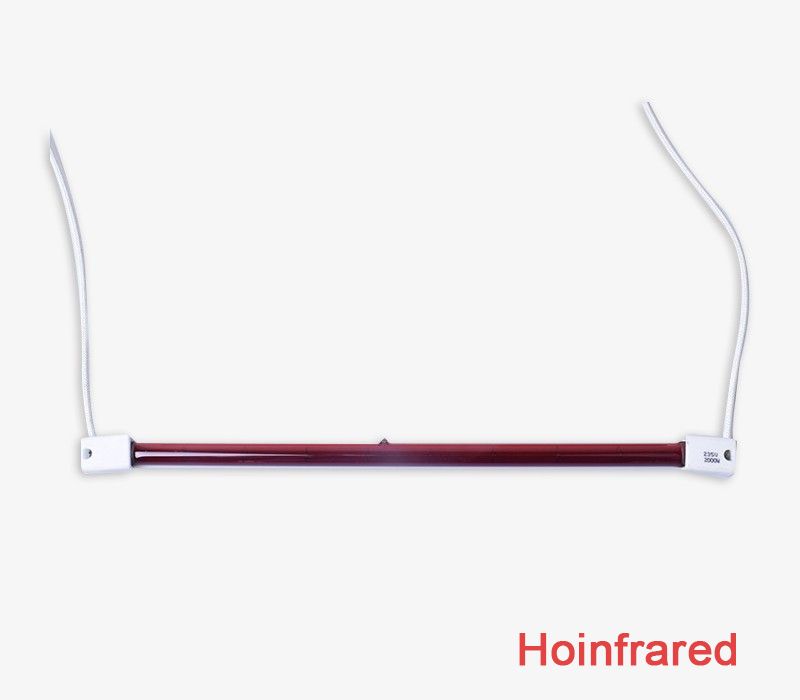
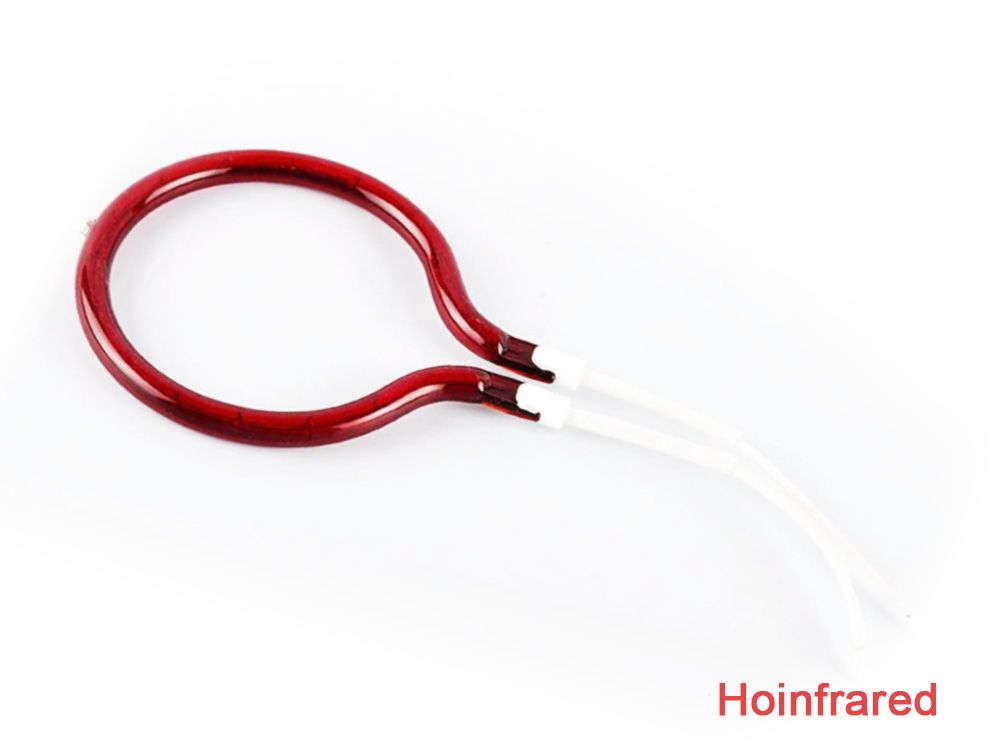
Our lamps feature quartz glass or ceramic housings. Quartz glass offers an infrared transmittance of over 90%, while ceramic provides superior high-temperature resistance and insulation. The choice of material depends on operating temperature requirements—quartz glass typically withstands up to 1000°C, whereas ceramic can handle even higher temperatures.
(4) Power density control
By optimizing filament resistance and voltage design, we achieve high power density (e.g., 10–30 W/cm). Additionally, heat dissipation grooves or air-cooling structures are integrated into the lamp housing to prevent overheating and extend service life.
(5) Sealing technology
The interior of the lamp is either evacuated to create a vacuum or filled with inert gases (such as nitrogen or argon), minimizing filament oxidation and significantly extending lifespan—typically reaching 5,000 to 10,000 hours.
IR ray is a kind of electromagnetic wave. It transmits energy at the speed of light. The energy from the sun mostly transmits by it. In spectral distributions, ......